


I named this newsletter after something that isn’t a moss plant. The Spanish Moss I was watching in the Lowcountry never was moss. And, that’s where this begins.
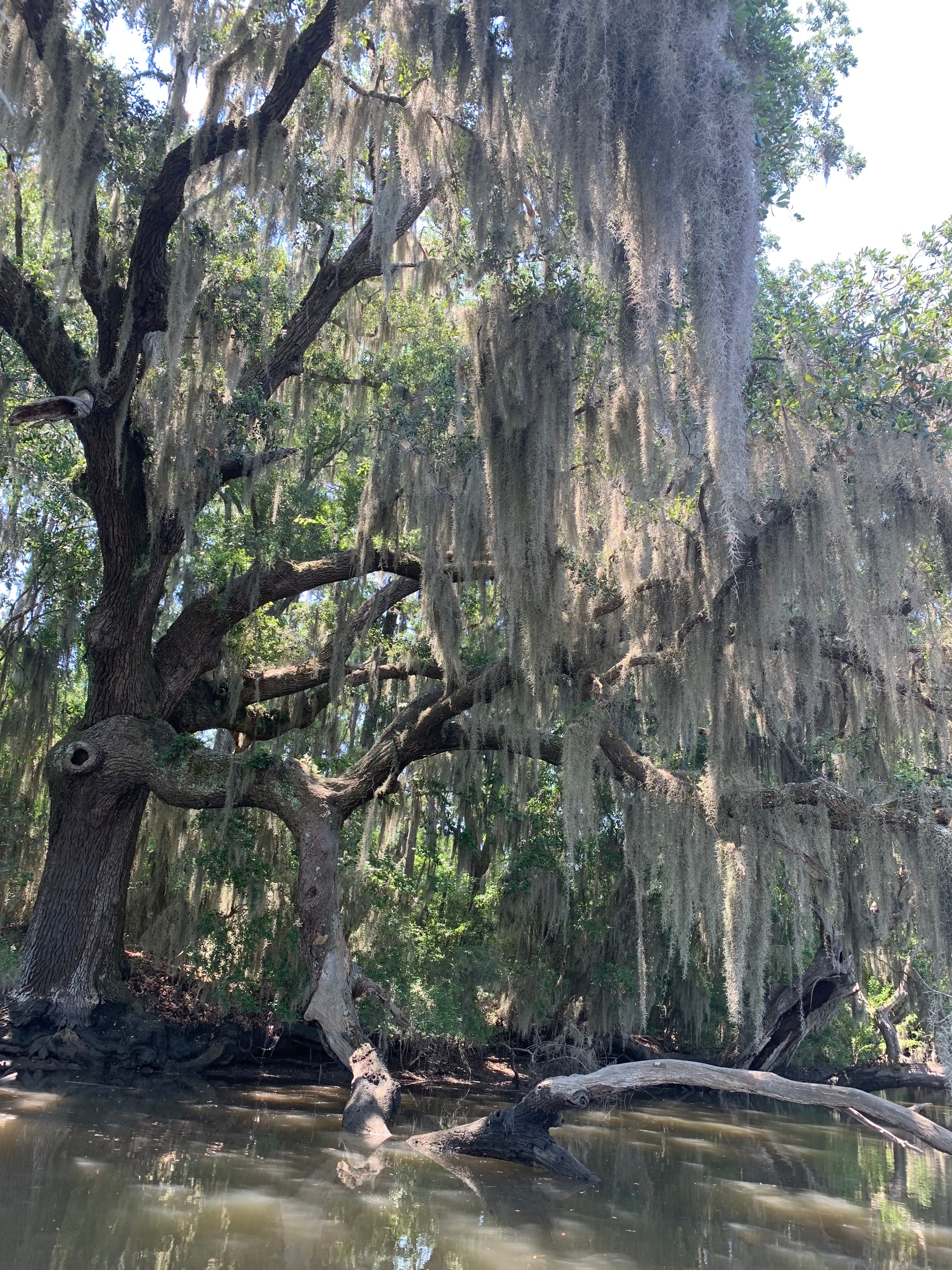
I’ve always been able to sit with difficult things. As a very young child, my mom would put me outside in the backyard to eat. My parents never wanted to have the mess in the house. Due to my mom’s cancer battle, she was never very attentive to cleaning things up. So, I sat outside by myself. I remember it clearly: neighborhood dogs and cats sitting around me. Almost in a full circle they all waited patiently. Me doling out pieces of my meal to each one in turn. I was a toddler who innately was present with animals and happy in the outdoors. The tension between dogs and cats that everyone assumes didn’t exist for me. A toddler leader and connector, motivated to eat and share something.
I was born with a hip deformity, which is something that in today’s technology would have been easily fixed. And yet there I was, toddling around with the neighborhood strays and roaming pets. Fear of water, bugs or plants just wasn’t there. Looking up at the sky. Feeling the breeze on my skin. I realize now that that hip deformity was a varus. This means a turning inward. Like my hip, I just never fit a standard category. Bent. Crooked and deviating from a straight path before I had words to name it.
What I remember most was the eyes and the expressions of the animals in front of me. The sunlight pouring through the trees and hitting my face. Looking up through branches that seemed miles away. Stumbling, falling and falling again, caught by the wetness and soft moss between my fingers and toes. Fuddling little pioneer in a place that was so mine.
My connection with animals continued throughout my life, most notably with horses. Even though I’m a trained scientist and researcher and though I’ve collected several certifications papers that say I met requirements, I fuddle. It has always been the horses that have taught me more about true living, pioneering, and the meaning of deep questioning more than any of my scientific work.
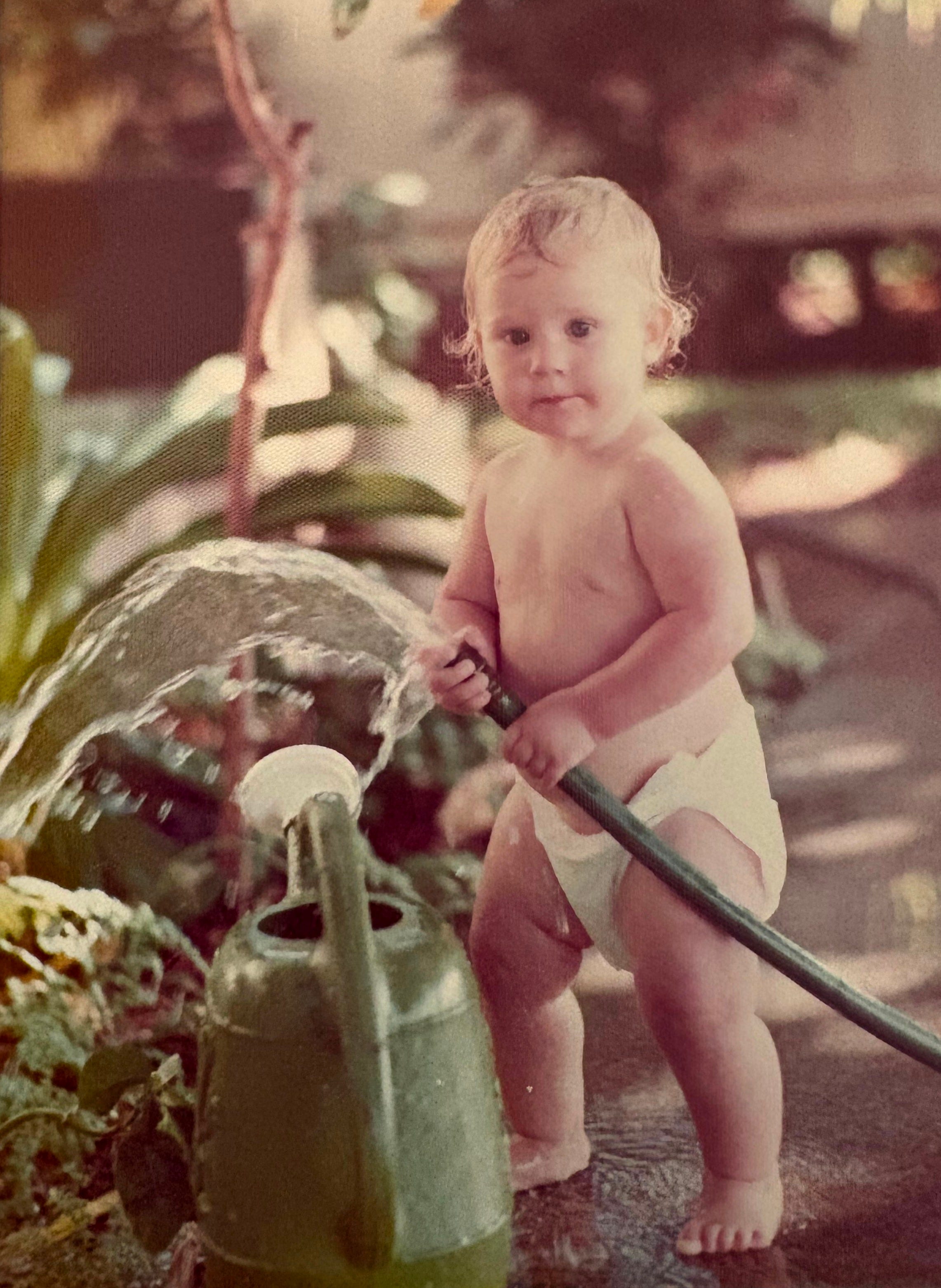
After a recent trip down to one of my favorite areas to relax, in the Lowcountry, I was peacefully watching the ebbs and flows of the tides. While porch sitting at the vacation home, a cat showed up to sit next to me. I returned to that moment as a pioneering toddler. The nearby trees were covered in Spanish Moss providing this gorgeous canopy of beauty, swaying gracefully in the breeze as the purple martins swooped nearby, over the tidal marsh to catch bugs and feed their fledglings. And yet, the cat sat with me, ignoring everything else. Sovereign and steady.
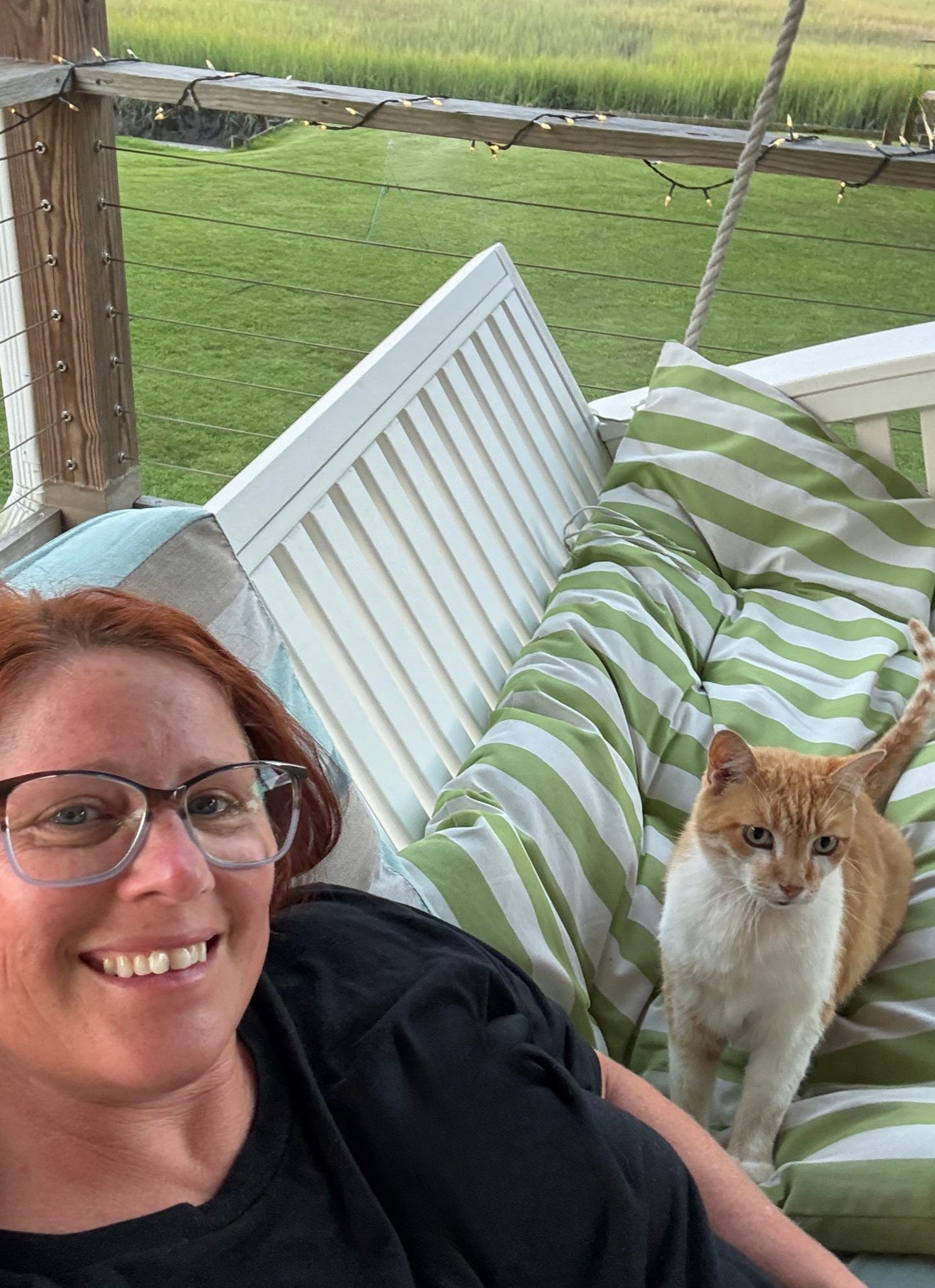
It was where I started to think again about this concept of Moss. And being the scientist that I am, I had to go look up Spanish Moss. Turns out since I’m not a trained plant biologist or a bryologist, I did not know that Spanish Moss is not a moss at all.
Epiphytes are plants that grow on the outside of plants. That graceful Spanish Moss hangs on trees but don’t root into or harm them. They survive entirely on air and rainwater. Botanically, Spanish Moss belongs to the bromeliad family as a relative to the pineapple, not a bryophyte. The name Spanish Moss in itself is a misclassification that stuck. People saw something that looked like moss, called it moss, and the name outlived the correction. Nobody looked closely enough to see what it actually was.
So, my realization was this: I named this entire project after something that was misunderstood from the beginning. And that is exactly what I write about.
Looking past the name of something to see what’s underneath.
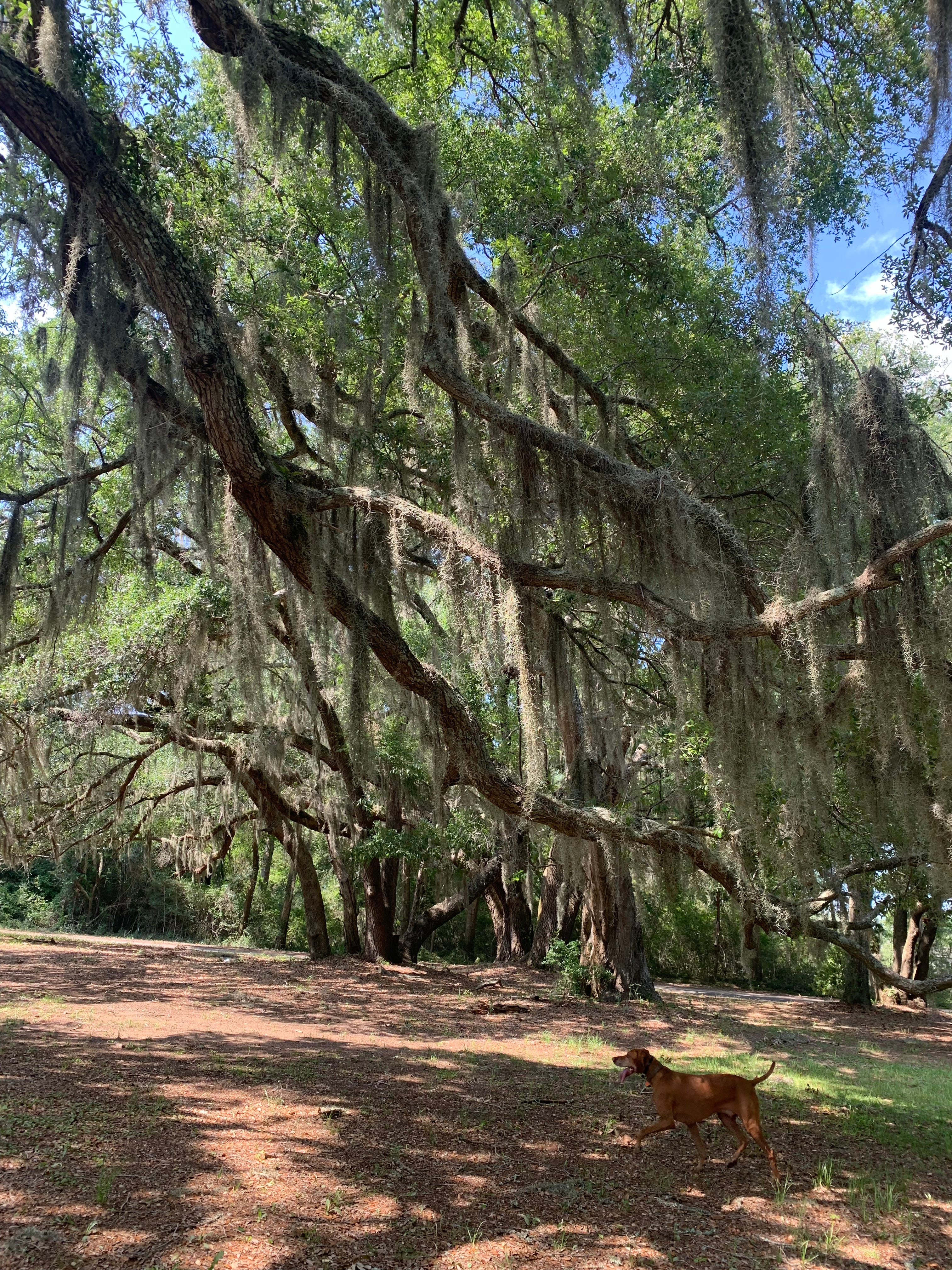
True mosses in the garden are bryophytes. There are roughly 20,000 bryophyte species worldwide, comprised of about 11,000 Moss, 7000 liverwort, 200 hornwort. None of these bryophytes have roots. They have rhizoids, which are rootlike structures that give them an anchor. But these structures do not absorb nutrients the way traditional roots do. Moss draws what it needs from air and surface moisture, similar to Spanish Moss, but they are unrelated species that arrived at a similar strategy to live independently of the ground.
Bryophyte moss IS a pioneer species. It’s often the first living thing to take hold on bare rock and slowly breaks that rock down into soil. Creating connections is what moss does best. Moss stabilizes ground before everything that grows after it. It creates a pathway for others.
Moss grows in irregular, organic patterns responding to actual conditions; moisture, shade texture. There is never a fixed geometric design. I feel this quality is a magnifying glass for creative, curious thinking. Such thinking follows what’s there rather than a rigid or predictable pattern. This is a core distinction between how I approach this explorative experience and AI. AI finds the pattern but with Moss we grow toward what’s real.
Returning to my observation of Spanish Moss and recognizing I was completely wrong. Realizing that settling for the resemblance of something we already know, instead of observing it with authentic curiosity is where lines blur. Turn inward and see how your roots show up. Come find out what happens when you stop fearing the question.
Naming something is not the same as knowing it.
Prediction
AI will eventually be used to reclassify everything we thought we already understood; species, historical progress, human behavior. The thing that will get lost in that reclassification is the story of how we got the name wrong in the first place.
Counter
The misclassification of Spanish Moss outlived the correction because nobody looked closely enough. AI will reclassify faster than we have ever reclassified before. Speed is not, however, the same as understanding. The question is more about who is looking closely enough to decide what counts.